Best Roofing Sheets for Coastal South India: Kerala, Tamil Nadu, Karnataka & Andhra Pradesh

From Mangaluru and Kochi down to Chennai and Visakhapatnam, South India’s coastline is home to ports, factories, warehouses, resorts and fast-growing housing. It is also one of the harshest places in the country to put a metal roof. Salt-laden air, high humidity, long monsoons and cyclone-driven winds all attack roofing sheets at once.
Choose the wrong sheet and you will see white rust, peeling paint and leaking laps within a few seasons. Choose the right one, with the right coating and accessories, and the roof can stay sound and good-looking for many years. This guide explains what to specify for coastal projects in Kerala, Tamil Nadu, coastal Karnataka and Andhra Pradesh.
Why roofs fail faster near the coast
- Chloride from sea spray settles on the sheet surface and attacks the metallic coating. Humid air keeps that film wet for longer, which speeds up corrosion.
- Weak points fail first. Cut edges, fastener holes and sheet overlaps are where corrosion usually begins, not the flat face of the sheet.
- Sheltered areas collect salt. Undersides of eaves and areas that rain does not wash tend to hold salt deposits and corrode faster than exposed surfaces.
- Wind and rain load. Coastal Andhra Pradesh and Tamil Nadu see cyclone-strength winds, and Kerala and coastal Karnataka see intense, wind-driven monsoon rain. Both stress laps, fasteners and purlin connections.
Which sheet for which zone?
There is no single answer, because exposure changes sharply with distance from the sea and with wind direction. Use the table below as a starting point, and have your engineer or supplier confirm it for your exact site.
Exposure | Typical examples | Sheet to consider |
|---|---|---|
Very close to the sea, heavy salt exposure | Port belts, fishing harbours, beachfront resorts and industry in Kochi, Mangaluru, Chennai (Ennore–Manali belt), Visakhapatnam | PPGL (pre-painted galvalume) with a high-durability paint system and full AZ coating. Discuss the site with the manufacturer. |
Coastal, moderate exposure | A few kilometres inland from the coast; towns such as Thrissur, Udupi, Nellore, Kakinada | PPGL, or Bare Galvalume for industrial roofs where appearance is secondary |
Humid but inland | Bengaluru, Hyderabad, Coimbatore, Madurai | Galvalume or PPGI, depending on budget and colour needs |
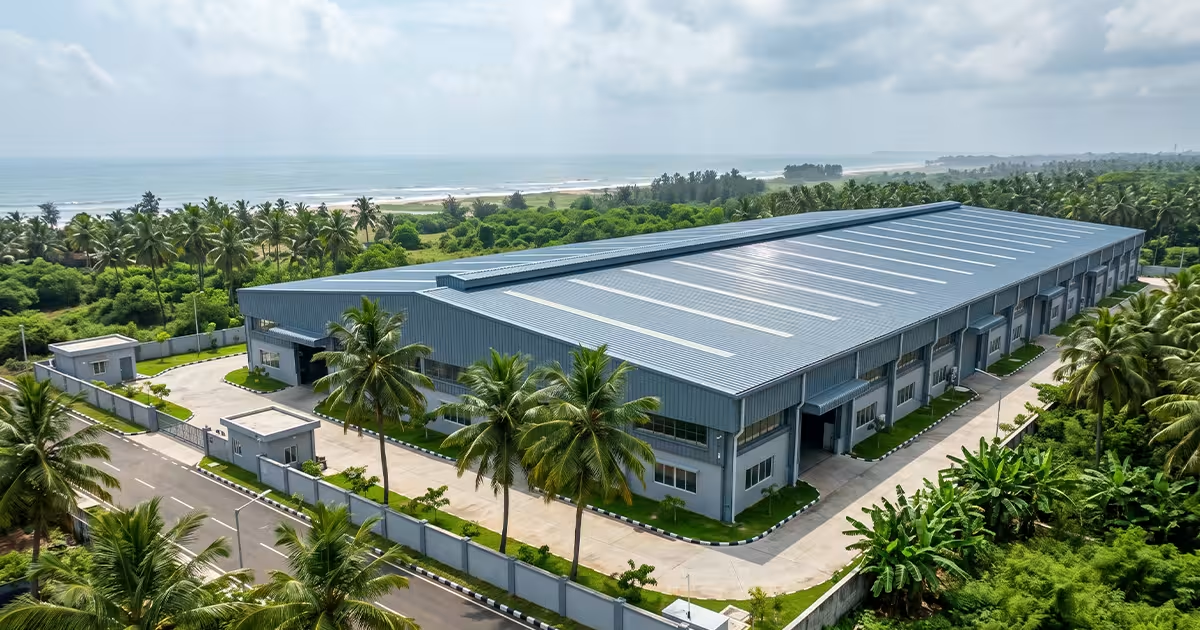
These are indicative bands, not fixed rules. A site 3 km from the sea with wind blowing off a creek can be more aggressive than one 1 km away behind a hill.
PPGL vs PPGI vs Bare Galvalume on the coast
PPGL (Pre-Painted Galvalume)
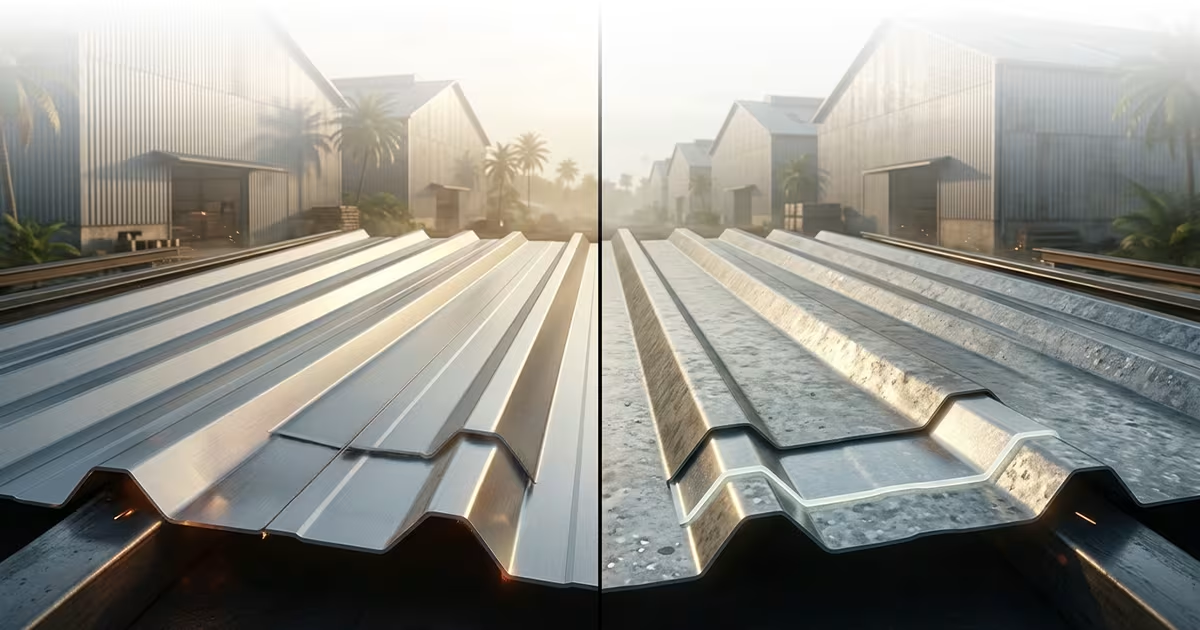
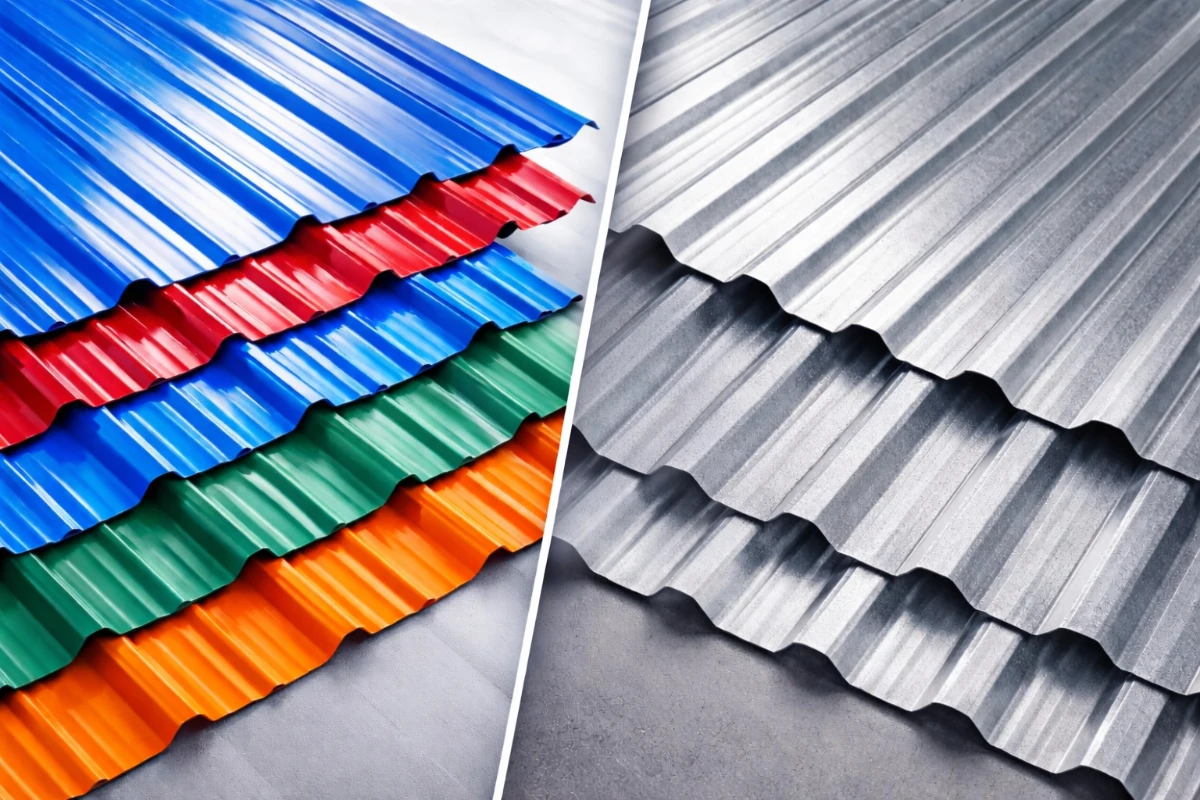
PPGL uses a steel base coated with an aluminium-zinc-silicon alloy, then a factory-applied paint system. You get the corrosion resistance of galvalume plus the extra barrier and colour of paint. For most coastal roofs where the sheets will be seen, this is the safest starting point.
Bare Galvalume
Galvalume’s alloy coating gives it far better corrosion resistance than standard galvanized steel, which is why it is popular for warehouses, plants and large spans. On coastal industrial sites it is a strong option where paint colour is not needed, but very aggressive marine or chemical exposure may still call for a painted system.
PPGI (Pre-Painted Galvanized)
PPGI uses a zinc coating under the paint. Zinc protects well in normal conditions, but in chloride-heavy air it is consumed faster than an aluminium-zinc alloy. PPGI can work for moderate exposure or shorter-life structures, but it is rarely the first choice on the immediate coast. For a deeper comparison, read our guide on PPGI vs Galvalume roofing sheets.
The details that matter as much as the sheet
- Coating mass: ask for the coating grade on the mill test certificate (for example AZ150 for galvalume). A thin coating on a good-looking sheet will not last near the sea.
- Paint system: for painted sheets, confirm the paint type. Higher-durability systems perform better in aggressive environments than basic polyester.
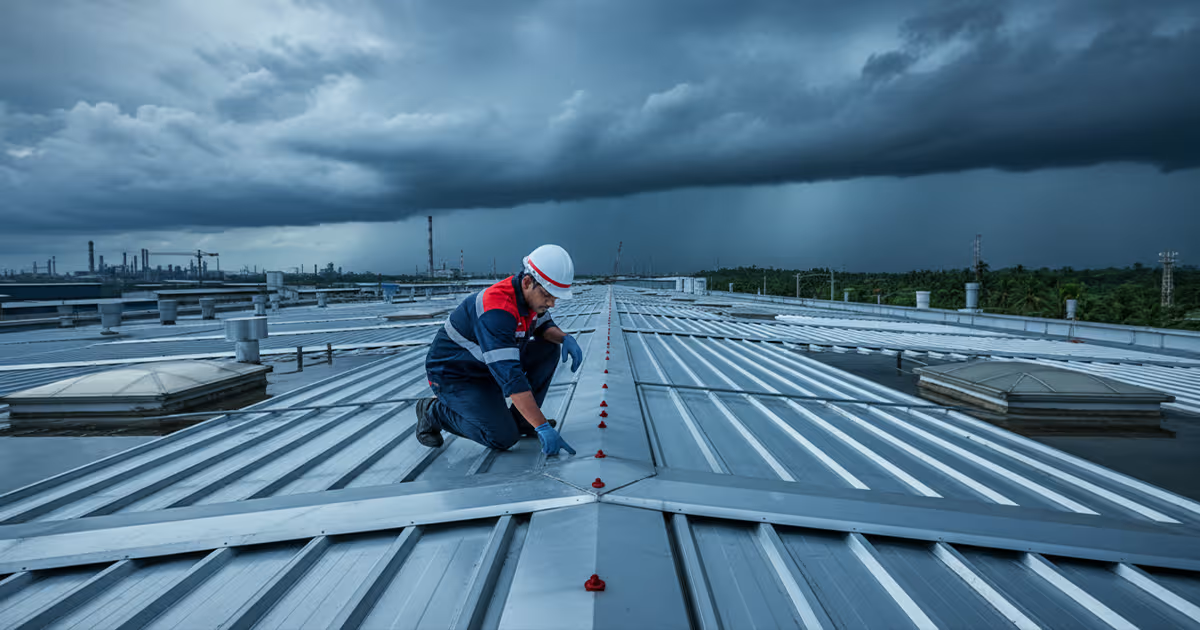
- Fasteners and washers: use corrosion-resistant fasteners with weather-proof sealing washers. A perfect sheet fixed with poor screws will leak and stain from the fastener points.
- Laps and sealants: use sealant tape at overlaps and follow the recommended lap for your profile and roof slope.
- Avoid mixing metals: do not let copper or unprotected steel components touch or drip onto the sheets, since this can trigger galvanic corrosion.
- Rinse and inspect: wash sheltered areas with fresh water periodically and touch up any cut edges or scratches early.
Designing for monsoon and wind
Kerala and coastal Karnataka need roofs that shed heavy rain quickly. That means adequate slope, profiles with deeper ribs, and good gutter and downpipe capacity. Where leaks would be costly, consider a standing seam roofing system with concealed fasteners, which reduces the number of holes through the sheet.
For cyclone-exposed stretches of Tamil Nadu and Andhra Pradesh, wind uplift is the main structural risk. Purlin spacing, fastener type and fixing pattern should be designed against wind loads in line with IS 875 (Part 3), by a qualified structural engineer. Your roofing supplier should give you the sheet thickness and profile data your engineer needs.
Quick buyer’s checklist for coastal projects
- Distance of the site from the sea and prevailing wind direction
- Coating type and coating mass, with the mill test certificate
- Paint system and colour, if using pre-painted sheets
- Sheet thickness and profile matched to purlin spacing and wind load
- Matching fasteners, sealant tape, flashings and ridge caps from the same supplier
- Warranty terms in writing, including what environments the warranty covers
Frequently asked questions
Which roofing sheet is best for coastal areas in Kerala?
For sites close to the sea, PPGL (pre-painted galvalume) is generally the safer choice because it combines an aluminium-zinc alloy coating with a paint barrier. For industrial buildings where colour does not matter, Bare Galvalume is also widely used. The right pick depends on how close the site is to the water.
Do galvanized roofing sheets rust near the sea?
Zinc coatings corrode faster in salt-laden air than aluminium-zinc coatings. Galvanized sheets can work in moderate exposure or for short-life structures, but for long-term coastal use most specifiers move to galvalume or PPGL.
How long do roofing sheets last near the coast?
Life depends on coating mass, paint system, distance from the sea, installation quality and maintenance, so no honest figure fits every roof. Ask your supplier for the coating specification and warranty terms in writing.
Does Astal Roofing supply to Kerala, Tamil Nadu and Andhra Pradesh?
Yes. Astal Roofing manufactures at its KIADB facility in Bengaluru and supplies projects across India, including South Indian states. Share your site location and specifications for a recommendation and quote.