Roofing Solutions for Factories & Warehouses in South India: Beating Heat, Rain and Wind

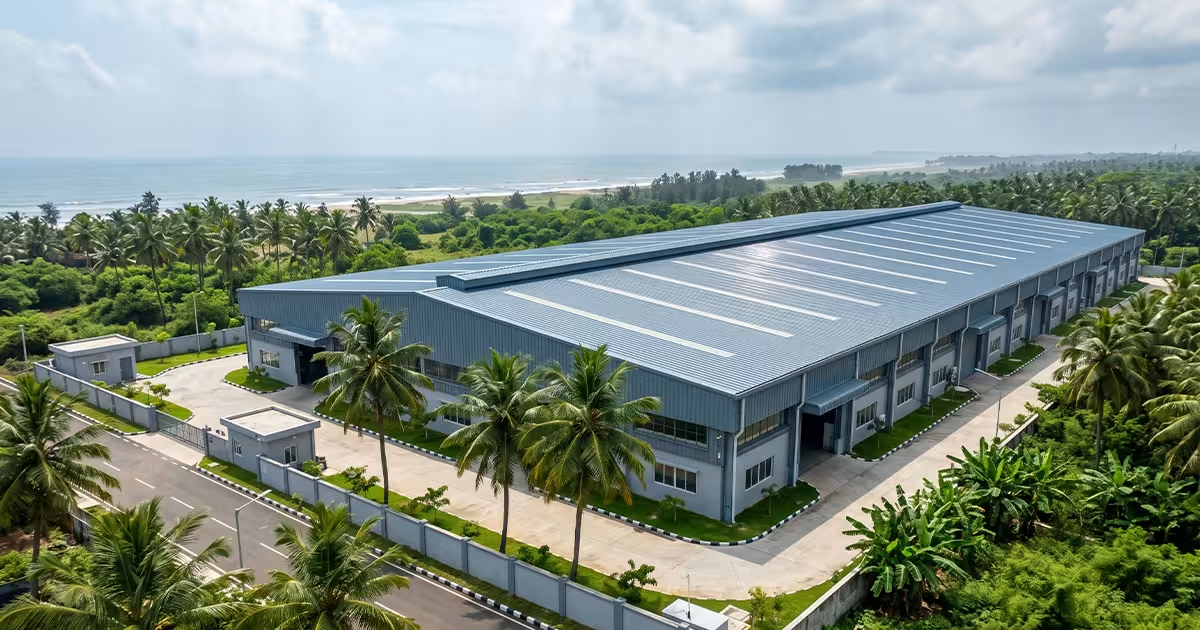
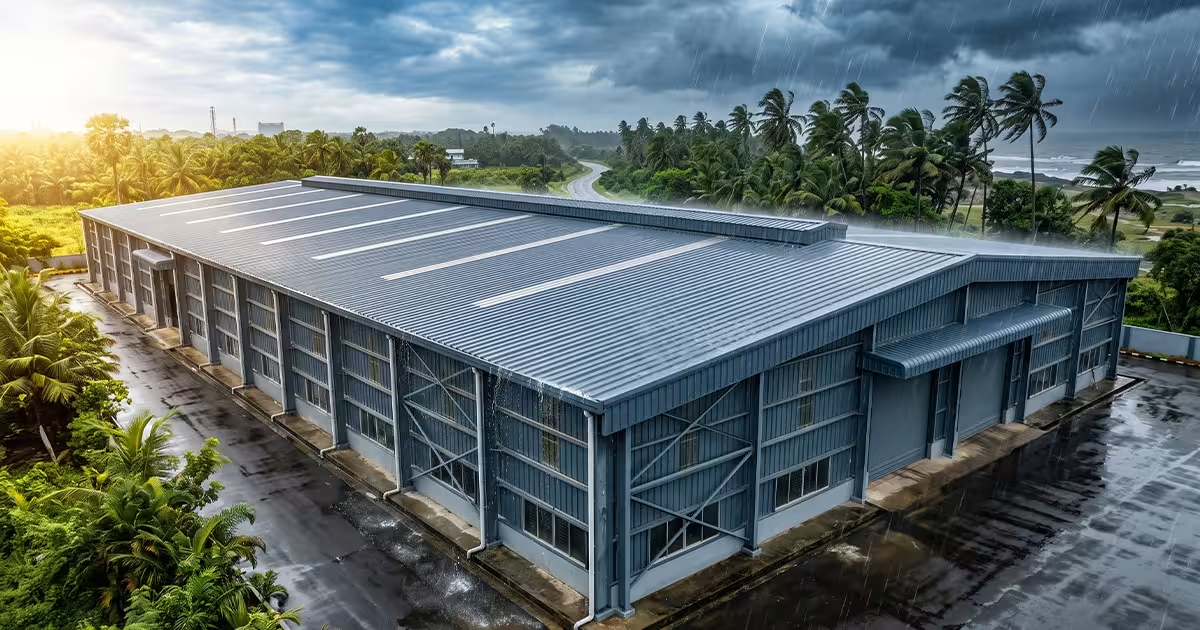
South India’s industrial belts keep growing: Peenya and Doddaballapur near Bengaluru, Hosur across the border in Tamil Nadu, Sriperumbudur and Oragadam near Chennai, Coimbatore’s engineering clusters, Patancheru around Hyderabad, and Sri City in Andhra Pradesh. Every one of these sites needs a roof that can handle long spans, intense summer heat, heavy monsoon rain and wind, while keeping lifetime cost under control.
For a factory owner, EPC contractor or procurement head, the roof is one of the biggest line items in the building envelope. This guide walks through how to choose sheets, thickness, insulation and ventilation for industrial buildings in South India.
What an industrial roof must handle in South India
- Heat: hot summers, especially across Telangana and interior Tamil Nadu and Andhra Pradesh, load the roof for months. A hot roof means a hot shop floor, lower worker productivity and higher cooling costs.
- Two monsoons: the south-west monsoon hits Karnataka and Kerala, while Tamil Nadu gets much of its rain from the north-east monsoon. Laps, slope and drainage need to be right for both.
- Wind and long spans: large-span PEB buildings have big roof areas exposed to wind uplift, so sheet thickness, purlin spacing and fasteners matter.
- Process environments: chemical, food, pharma, auto and electronics units each place different demands on corrosion resistance and leak-proofing.
Choosing the right sheet for your application
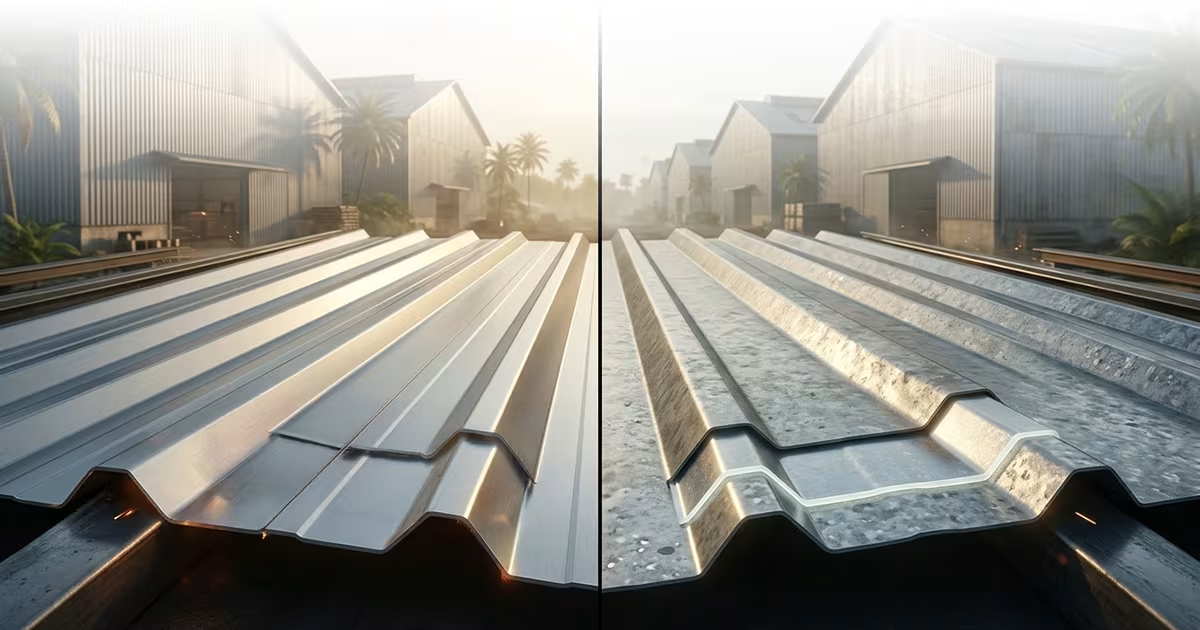
General factory or warehouse roof | Bare Galvalume (AZ150 grade) | Strong corrosion resistance and long life at a sensible cost over large areas |
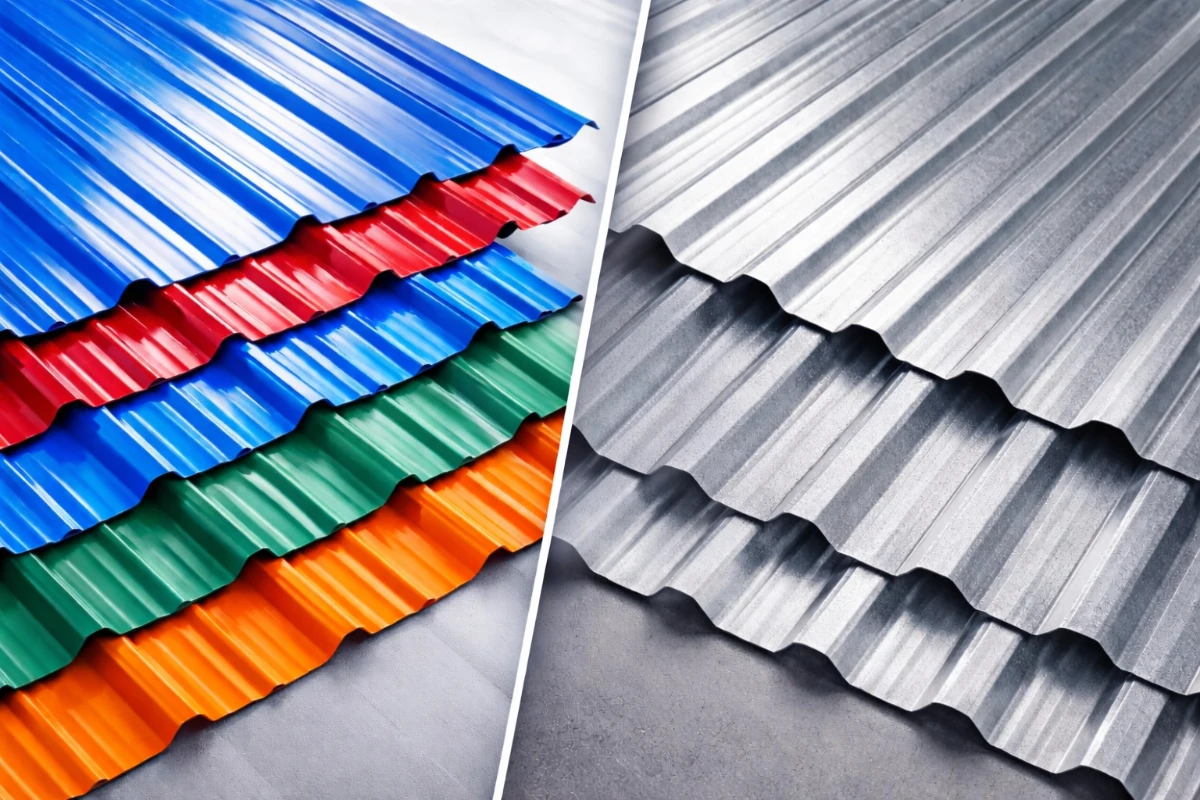
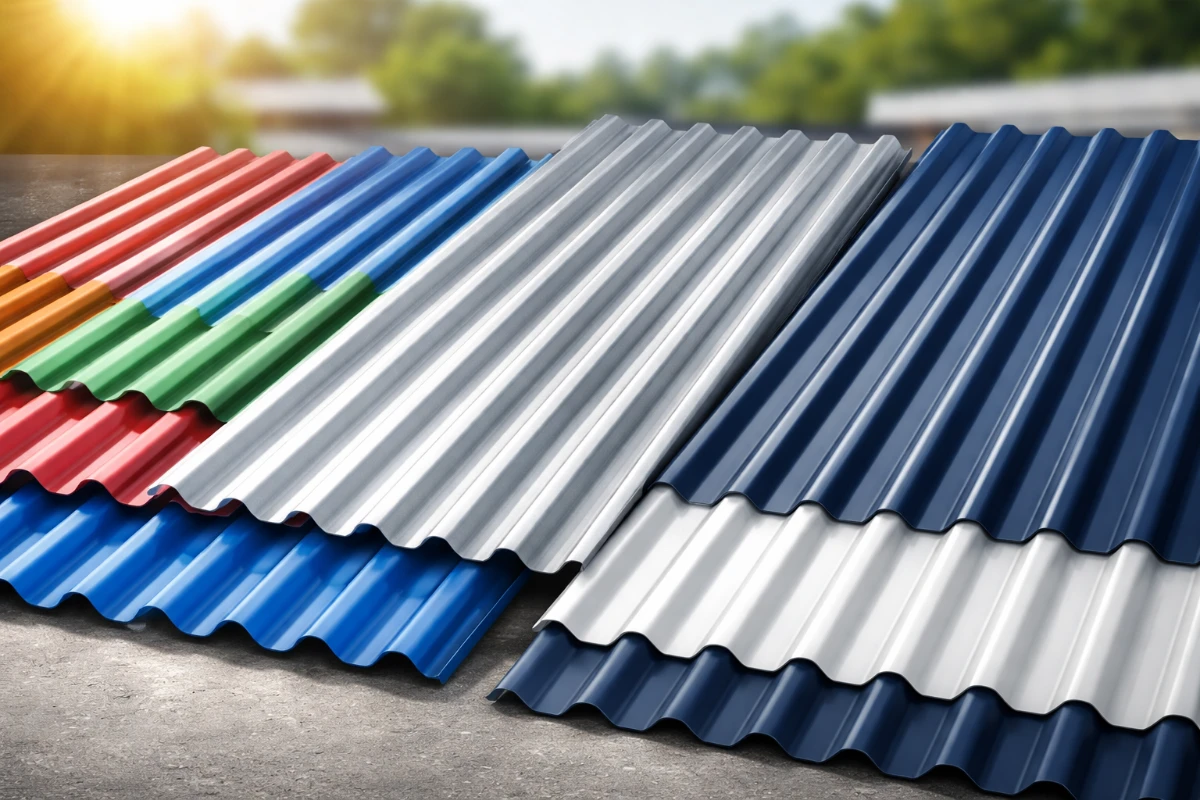
Visible roofs, brand colours, heat reduction | PPGL or PPGI in light shades | Factory-applied colour; lighter shades reflect more heat |
Budget-driven, mild environment (agri sheds, storage) | Bare Galvanized | Proven, cost-efficient zinc-coated protection |
Leak-sensitive units (pharma, electronics, food, cold storage) | Standing seam system with concealed fasteners | Fewer roof penetrations and a clean, leak-resistant finish |
Chemical or coastal industrial sites | PPGL with a higher-durability paint system | Paint barrier on top of an alloy coating for aggressive air |
Sheet thickness: understand TCT vs BMT
Two numbers are quoted in the industry, and mixing them up is a common source of disputes. BMT (base metal thickness) is the steel alone. TCT (total coated thickness) includes the metallic coating and paint on top. Two quotes that both say “0.5 mm” may not be comparable unless both are stated the same way.
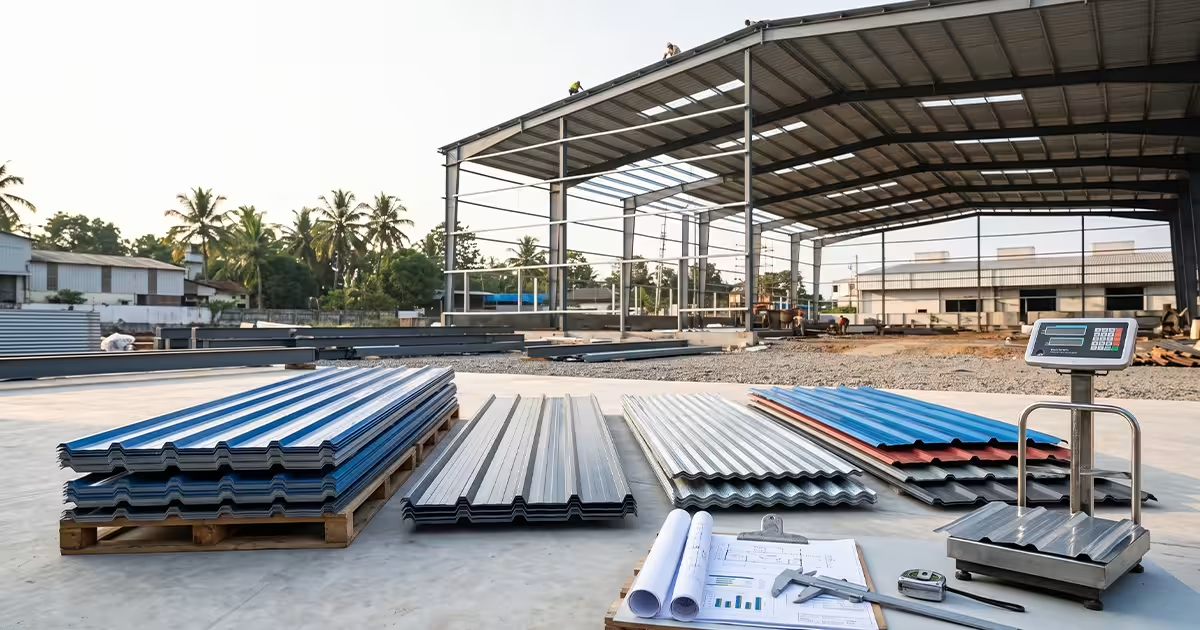
Thickness should be chosen together with purlin spacing and wind load, not on price alone. A thin sheet on wide purlin spacing can deflect, ripple and loosen at fastener points. Roofing sheets for industrial buildings are commonly specified in the sub-1 mm range, but your structural engineer should confirm the right figure for your design. Always ask for the mill test certificate showing thickness and coating mass.
Five ways to keep a factory roof cooler
- Reflective colours: lighter colours on PPGL or PPGI sheets reflect more solar heat than dark shades.
- Insulation under the sheet: options include glass wool, bubble foil or insulated panels. The right choice depends on budget and the level of comfort or process control you need.
- Roof ventilation: wind-driven turbo ventilators and ridge ventilators let hot air escape from the top of the building.
- Wall louvers for cross-ventilation: gable-end and wall-mounted steel louvers bring in fresh air and exhaust heat, fumes and humidity while keeping rain out.
- Daylighting done carefully: translucent roof lights reduce daytime lighting cost, but too much area adds heat. Your designer will set the right proportion for your building.
Buy the whole envelope from one manufacturer
A roof is more than sheets. Purlins, flashings, ridge caps, fasteners, rivets, sealant tapes, ventilators and louvers all need to fit each other and match in colour. Sourcing them from several vendors is where delays, mismatched shades and finger-pointing over leaks begin. A single manufacturer supplying roofing sheets, cold-formed sections, accessories and louvers gives you one point of contact and consistent material quality.
Monsoon-proofing your industrial roof
- Follow the recommended end-lap and side-lap for the profile and roof slope
- Use sealant tape and proper washers at fasteners and laps
- Size gutters and downpipes for peak monsoon rainfall, not average rainfall
- Detail flashings carefully at ridges, gable ends, skylights and wall junctions, where most leaks start
What to send your supplier for a fast, accurate quote
- Building drawings or roof area and slope
- Preferred sheet type, profile, thickness and coating
- Colour code if using pre-painted sheets
- Accessories list: ridge, flashings, fasteners, sealants, ventilators, louvers
- Delivery location and required timeline
Frequently asked questions
Which roofing sheet is best for factories in Bangalore?
Bare Galvalume is a popular choice for factories and warehouses because of its corrosion resistance and cost efficiency over large spans. PPGL or PPGI suits buildings where colour or heat reflection matters. Standing seam is worth considering where leaks would be costly.
How can I keep my factory roof cool in Hyderabad’s heat?
Combine light-coloured sheets, under-roof insulation, roof-top turbo ventilators and wall louvers for cross-ventilation. No single item does it all; the combination works best.
What thickness roofing sheet should I use for a warehouse?
It depends on purlin spacing, wind load and the sheet profile. Confirm with your structural engineer, and make sure quotes state whether thickness is BMT or TCT.
Can Astal Roofing deliver to Chennai, Hosur and Hyderabad?
Yes. Astal manufactures in Bengaluru and supplies industrial projects across India, including Tamil Nadu, Telangana and Andhra Pradesh. Send your drawings for a quote.