Replacing Old Asbestos and Rusted Roof Sheets in South India: A Practical Re-Roofing Guide
Across South India, thousands of factories, godowns, schools, farm buildings and workshops still sit under roofs installed decades ago: cement or asbestos-cement sheets gone brittle, galvanized sheets streaked with rust, and laps that leak every monsoon. A tired roof is more than an annoyance. It damages stock and machinery, makes the building hotter and can become a safety risk.
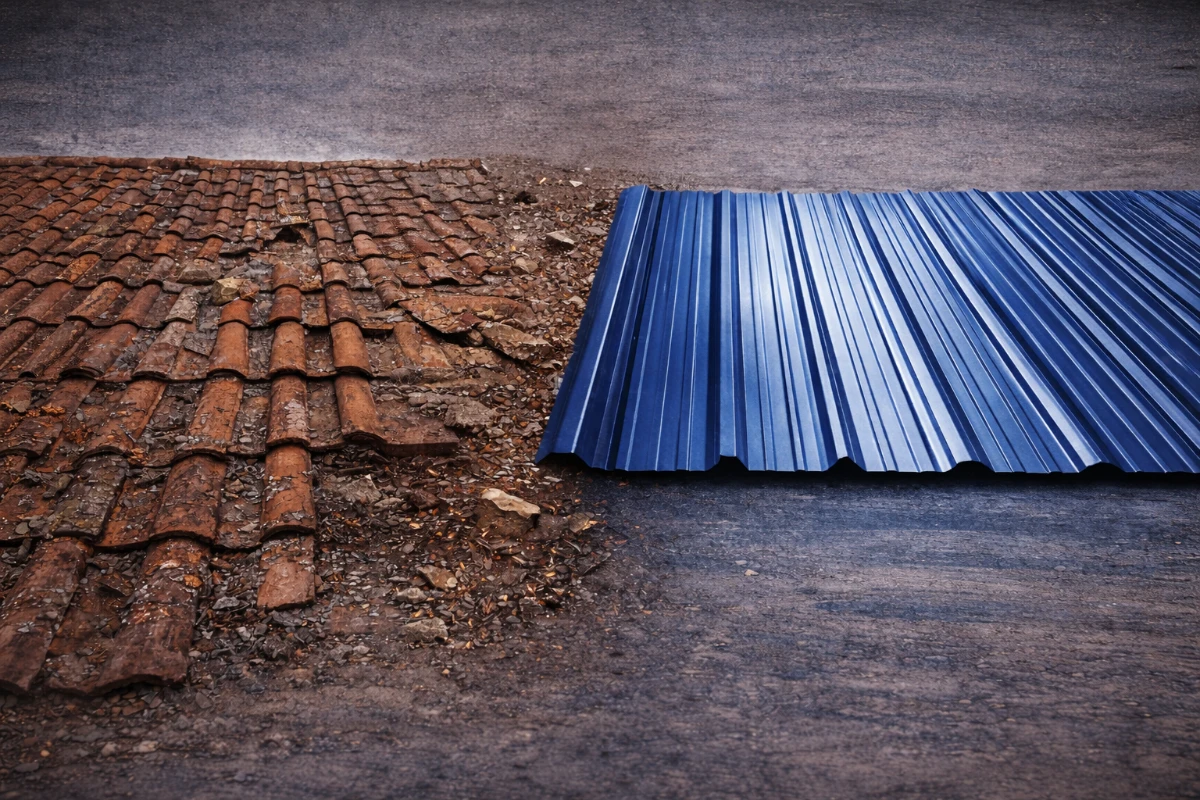
The good news is that re-roofing with modern metal sheets is one of the more practical upgrades a building owner can make. This guide covers the warning signs, the safety points around old asbestos sheets, how to plan the job around production, and what to specify for the new roof.
Signs your roof needs replacing
• Leaks that return after patching, especially at laps, fasteners and valleys
• Red rust, white rust or perforations in metal sheets
• Cracked, broken or crumbling cement or asbestos-cement sheets
• Sagging or rusted purlins and loose fixings
• A building that has become noticeably hotter or darker inside
• Repair bills rising year after year
A note on asbestos-cement sheets
Older cement roof sheets may contain asbestos fibres. The risk comes when the sheets are broken, drilled, cut dry, pressure-washed or crushed, because that can release fibres into the air. Intact, undisturbed sheets are a different situation from sheets that are being removed.
• Do not break, drill, dry-cut or pressure-wash old cement sheets yourself
• Use trained contractors who follow safe removal methods, including keeping sheets wet and wearing proper protective equipment
• Remove sheets whole where possible, wrap them and arrange disposal as required by local rules
• Check current regulations in your state before you start
This is general guidance, not a legal or safety instruction. Always involve a qualified safety professional for asbestos work.
Replace or over-roof?
Full replacement
Over-roofing (new sheets over old)
When it suits
Damaged sheets, rusted or weak purlins, asbestos present or suspected, long-term building
Sound structure and a roof that mainly needs weatherproofing
Structure check
Allows repair or replacement of purlins
Old purlins stay; they must be sound
Downtime and disturbance
More disturbance; needs phasing
Less disturbance, since old sheets stay in place
Long-term result
Fresh start with full design control
Depends on what stays hidden underneath
Key caution
Safe removal and disposal of old sheets
Trapped moisture, hidden corrosion and added load; get an engineer’s approval
Metal roofing sheets are far lighter than cement sheets, so replacing old cement with metal often reduces the load on the structure. Even so, the purlins, rafters and connections still need an engineer’s check, because rust and fatigue may have weakened them.
How to re-roof without stopping production
• Survey and structural check: inspect purlins, rafters, connections and gutters. Decide what to repair or replace.
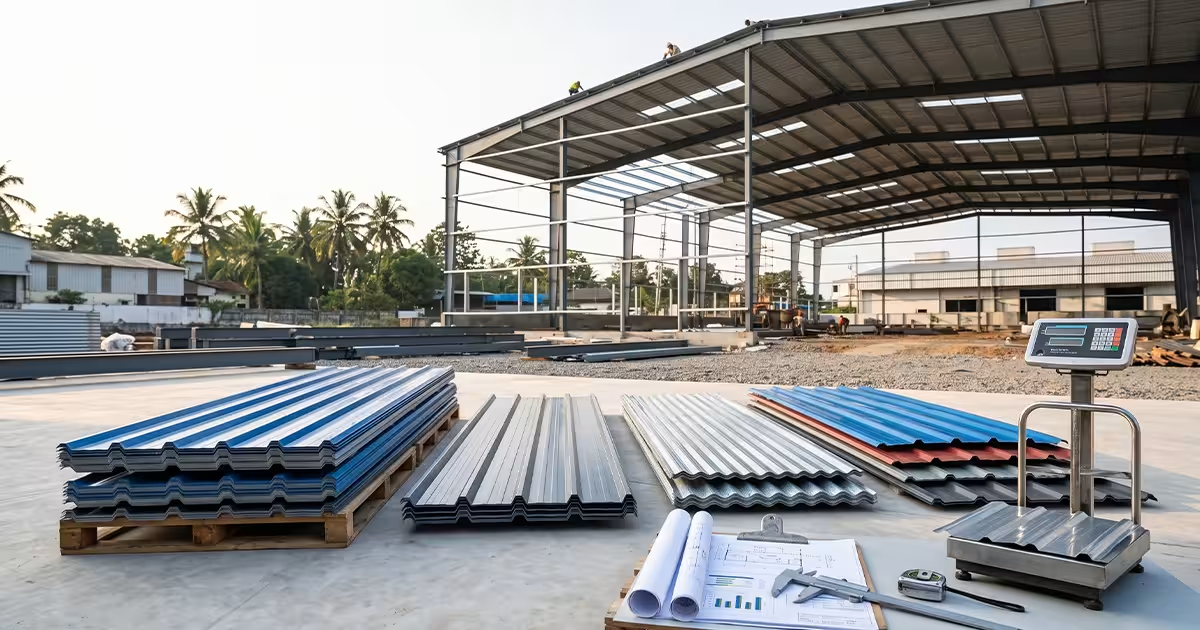
• Specify the new roof: choose sheet type, coating, thickness and profile for your environment (see below).
• Phase the work bay by bay: replace one section at a time so most of the building stays covered and in use.
• Protect stock and machinery: use temporary covers and keep work areas clear while sheets are removed.
• Fix the structure first: replace rusted purlins and loose fixings before laying new sheets.
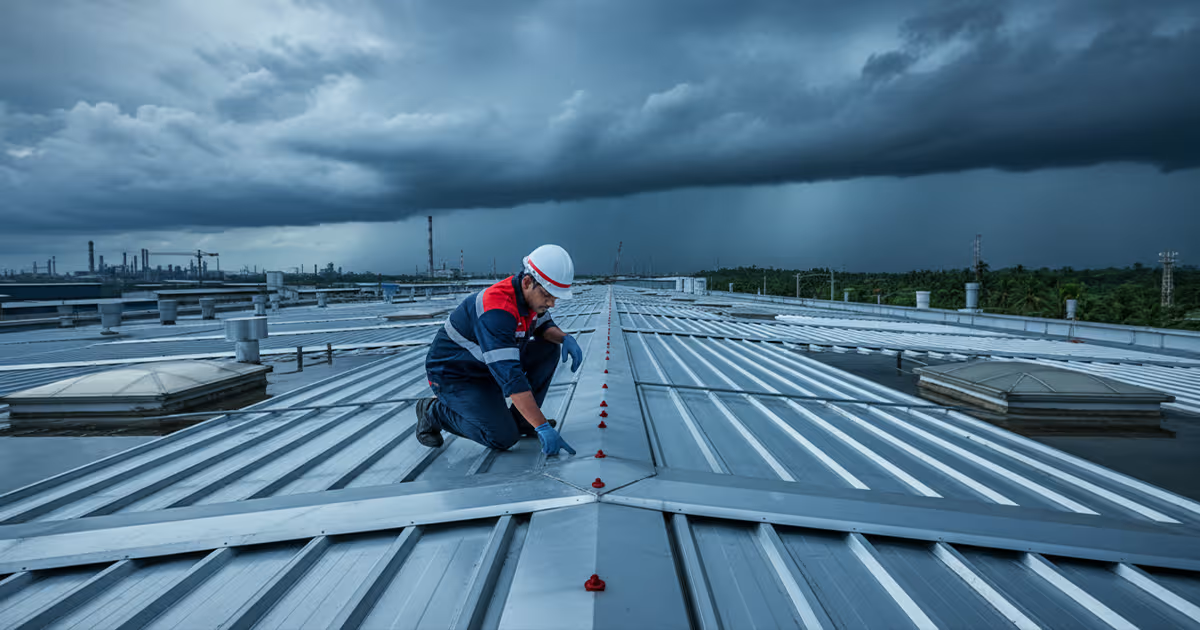
• Install with proper laps, sealants and flashings: detail ridges, valleys, gable ends and penetrations carefully.
• Check gutters and downpipes: a new roof still leaks at the edges if drainage is undersized.
Timing: plan around your region’s monsoon
In Karnataka and Kerala, aim to finish before the south-west monsoon sets in around June. In Tamil Nadu, where much of the rain comes with the north-east monsoon from October to December, the pre-monsoon and summer months are often better for the work. Local conditions vary, so confirm the schedule with your contractor.
What to specify for the new roof
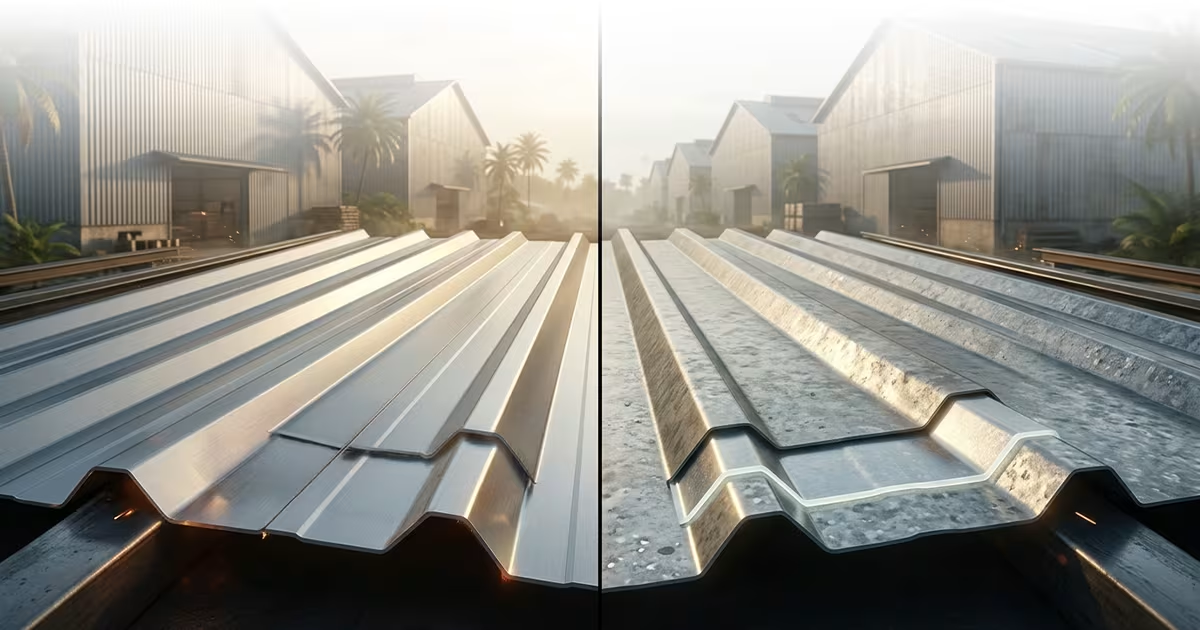
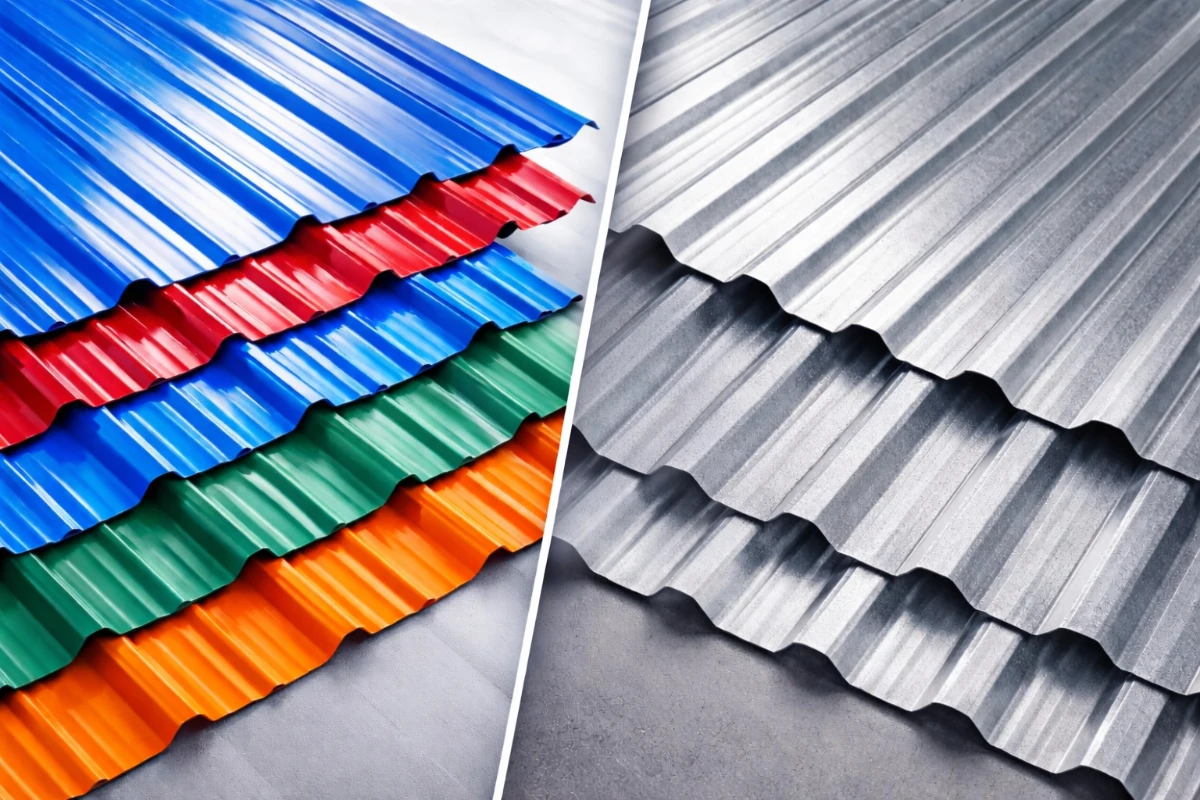
• General industrial and warehouse roofs: Bare Galvalume is a popular, cost-efficient choice for large areas.
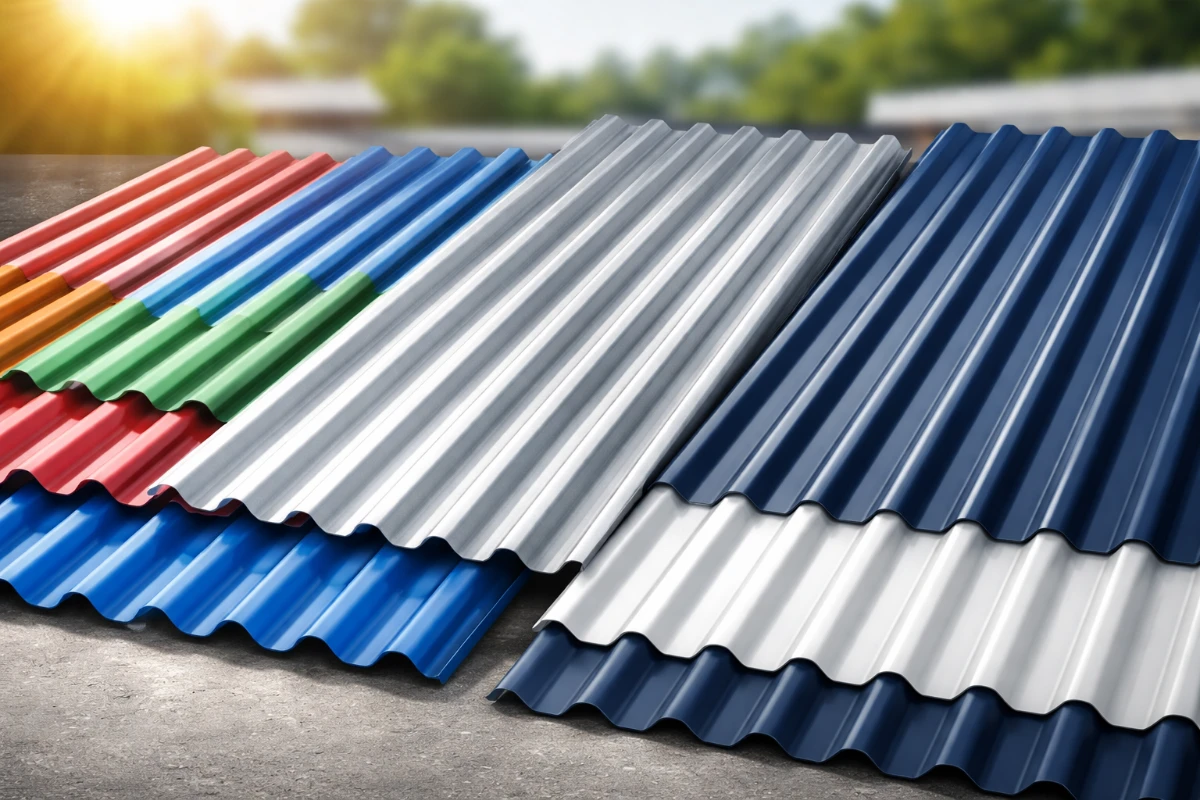
• Visible roofs or heat-sensitive buildings: PPGL or PPGI in light colours, with insulation underneath where needed.
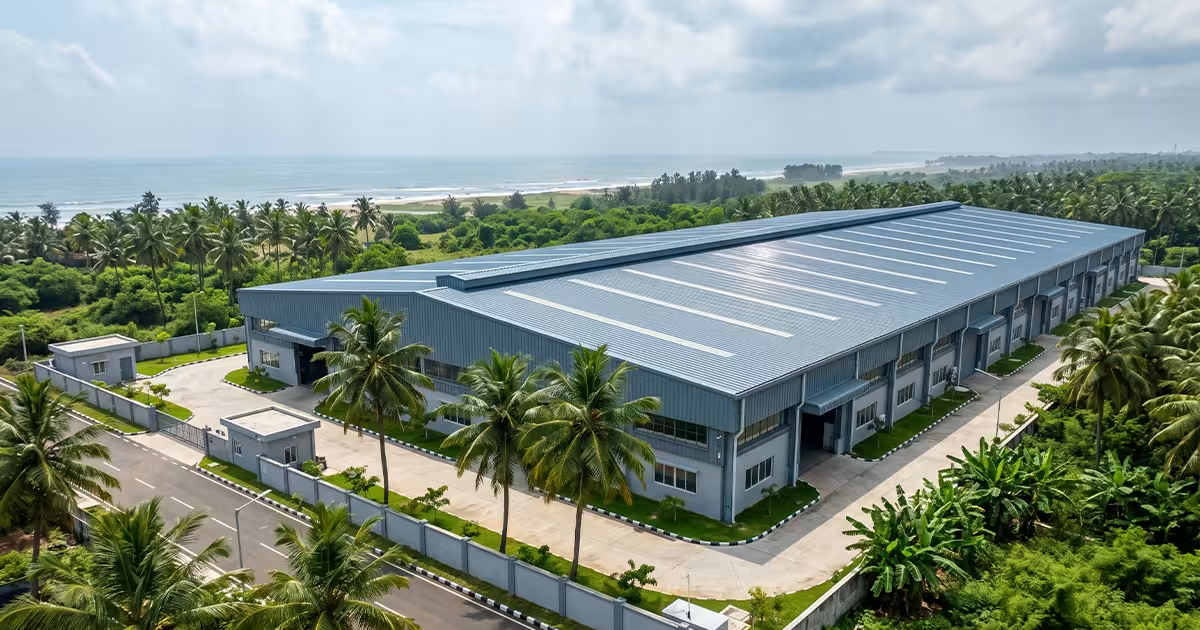
• Coastal sites: PPGL with a suitable paint system. See our coastal roofing guide for details.
• Light-duty sheds and farm buildings: Bare Galvanized can work where the environment is mild and budget matters.
• Leak-sensitive buildings: consider a standing seam system
Use the re-roof to fix more than the leak
• Ventilation: add turbo ventilators on the roof and louvers on the walls to push out heat and humidity.
• Daylight: add translucent roof lights in the right proportion to cut lighting costs without adding too much heat.
• Insulation: add glass wool, bubble foil or insulated panels where comfort or process control matters.
• Drainage: upgrade gutters and downpipes for peak monsoon flow.
What affects the cost of re-roofing
Roof area, sheet type and thickness, structural repairs, ease of access, removal and disposal of old sheets, accessories and phasing all feed into the cost. Because every building is different, ask for a written quote based on a site survey, and compare the lifetime cost of the new roof with what you spend each year on repairs and damaged stock.
Frequently asked questions
Can I install metal roofing sheets over my old roof?
Sometimes, if the structure is sound and an engineer approves it. Over-roofing hides existing problems, so a full replacement is better when sheets are damaged, purlins are rusted or asbestos is present
Is it safe to remove old asbestos-cement sheets myself?
It is best left to trained contractors who follow safe removal and disposal methods. Breaking or drilling old sheets can release fibres, so check your state’s rules and involve a safety professional.
How long does it take to re-roof a factory?
It depends on the roof area, structural repairs and how many bays are worked on at once. A site survey is needed for a realistic schedule.
Which roofing sheet should replace my old asbestos sheets?
Bare Galvalume suits most industrial and warehouse roofs, while PPGL or PPGI suit visible or heat-sensitive buildings. Coastal and chemical sites need a more corrosion-resistant specification.